


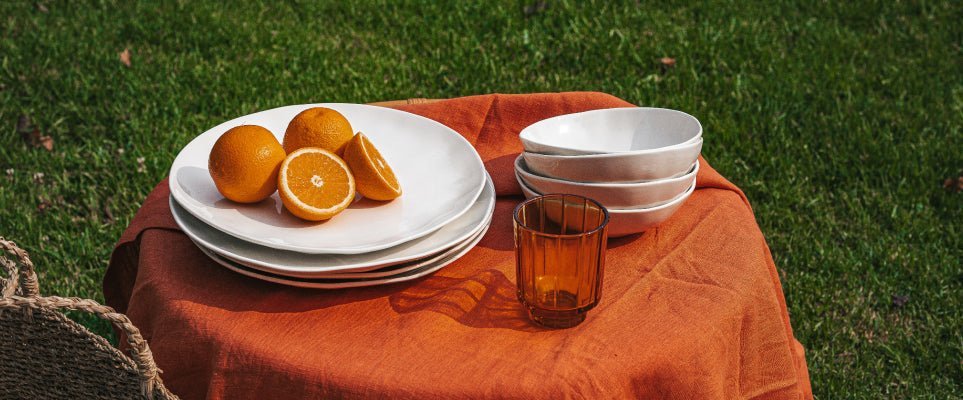
A well-set table depends on more than choosing a good dinnerware set. Serving platters, bowls, and salad bowls also contribute to the presentation of the meal and to the experience of those gathered around the table.
Knowing how to combine plates, serving platters, and bowls allows you to create a balanced, functional composition suited to different occasions.
The pieces do not all need to belong to the same collection. Different colors, patterns, shapes, and materials can coexist on the same table, as long as there is a visual connection between the various elements.
At Gato Preto, we believe that every home has a unique DNA. The table should reflect that identity, allowing for personal, elegant, and even unexpected combinations.
In this guide, we explain how to combine different pieces of tableware, organize the presentation of food, and create a table that works just as well for everyday life as it does for a special occasion.
In this guide, you will find
- How to choose the plates that form the foundation of the table.
- How to coordinate plates, serving platters, salad bowls, and bowls.
- How to mix colors, patterns, and shapes.
- Which pieces to use for serving different foods.
- How to arrange tableware without taking up too much space.
- Ideas for everyday meals and special occasions.
- The most common mistakes when combining tableware.
Start with the plates that define the foundation of the table
Plates occupy the central position at each place setting and establish the starting point for the entire composition.
A neutral base, in white or soft tones, allows greater freedom when choosing serving platters and bowls.
Plates with patterns or intense colors take center stage. In this case, the remaining pieces can be more understated to maintain visual balance.
Before deciding, think about the atmosphere you want to create. A minimalist table calls for few colors and simple lines. A more expressive table allows patterns, contrasts, and different textures.

Explore the Gato Preto plate collection and choose a base that suits your routine and your home's personality.
How to combine plates and serving platters
Serving platters display the food and help create a sense of abundance and sharing. They should complement the plates, but do not need to match them exactly.
Repeat a color featured on the plates
One of the simplest ways to create cohesion is to repeat a color.
If the plates feature blue details, choose a blue or white serving platter, or one with small touches in the same shade.
It is not necessary to find a perfect match. A subtle relationship between the tones is enough to visually unite the pieces.
Combine patterned plates with plain serving platters
When the plates have expressive patterns, a plain serving platter helps balance the arrangement.
Choose one of the colours present in the pattern or use a neutral tone, such as white, beige or grey.
This solution allows the plates to remain the focal point and makes presenting the food easier.
Enhance neutral plates with original serving platters
A white or understated dinnerware set works as a blank canvas.
You can add personality with serving platters featuring organic shapes, textured finishes, striking colours or illustrations.
This combination is especially useful for those who want to maintain a versatile base and refresh the table through serving pieces.

Discover different options in the Gato Preto serving platters, salad bowls and serving dishes collection.
How to choose the right serving platters for each meal
The choice of serving platter should take into account the type and quantity of food to be served.
Long or oval serving platters
They are suitable for serving fish, meat, roasted vegetables, starters or a selection of small snacks.
The elongated shape also helps distribute food visually and can be placed in the centre without taking up the table's entire width.
Round serving platters
They work well for pasta, rice, desserts, tarts and dishes to be shared by everyone.
Round shapes create a softer arrangement and pair easily with plates and bowls in the same shape.
Serving dishes
Serving dishes are useful for serving soups, broths, stews or hot dishes that should remain covered until serving.
In addition to their practical function, they can become an elegant centrepiece on a more traditional or festive table.
How to combine plates and bowls
Bowls are particularly versatile pieces. They can be used for starters, soups, cereals, individual salads, side dishes, desserts or small snacks.
To combine plates and bowls, look for a connection through colour, shape or finish.
Use bowls from the same visual family
For a cohesive arrangement, choose bowls with the same colour or texture as the plates.
This solution creates a serene, organised table suitable for both everyday use and more formal meals.
Create contrast with a complementary colour
If the plates are neutral, you can use colourful bowls to add depth to the table.
For example, white plates pair easily with blue, green, terracotta or black bowls.
Repeat that colour in a napkin, glass or decorative piece to make the arrangement more cohesive.
Mix different shapes in moderation
Round plates can be combined with bowls featuring organic or slightly irregular lines.
This difference adds movement, but it should be balanced by a shared colour palette.
Discover the Gato Preto bowls and salad bowls collection to find shapes suited to different meals and table settings.
Bowls, salad bowls or serving platters: which should you use?
Each piece has a different function, although some can be used in several ways.
| Piece | Main use | Ideal for |
|---|---|---|
| Small bowl | Individual servings or small side dishes. | Starters, sauces, nuts, desserts or snacks. |
| Medium bowl | Individual meals or smaller shared servings. | Soups, cereals, salads, rice or side dishes. |
| Salad bowl | Serving food at the centre of the table. | Salads, pasta, vegetables, fruit or bread. |
| Serving platter | Serving main courses or starters. | Meat, fish, roasts, cheeses, appetisers or desserts. |
| Soup tureen | Serving hot dishes. | Soups, broths, stews or side dishes. |
Before choosing, consider the number of people and the space available on the table.
A piece that is too large can make it difficult to move plates around. A small piece may require constant replenishment during the meal.
How to mix tableware from different collections
Mixing collections allows you to create a more personal table setting and avoids an overly predictable arrangement.
The secret is to select an element that is repeated.
Use a palette of two or three colours
Choose a main colour, a secondary colour and, if necessary, a neutral shade.
This rule helps integrate pieces with different patterns and shapes without creating visual clutter.
Repeat a material or finish
Even when the colours vary, a similar finish can create a connection.
Glossy pieces, matte surfaces or artisanal textures can be combined through this shared characteristic.
Distribute the patterns across the table
Avoid concentrating all the patterned pieces in the same spot.
Distribute the patterns among plates, glasses or small serving dishes, alternating them with plain elements.
This way, the eye travels across the entire table and the arrangement becomes more balanced.
How to arrange plates, serving dishes and glasses on the table
A beautiful table should also be functional. Guests need to be able to reach the food without moving several pieces.
Place the main pieces in the center
The larger serving platters and salad bowls should occupy the central area, where they are accessible to everyone.
If the table is long, distribute the food in two places to prevent guests from having to constantly pass the dishes around.
Alternate tall and low pieces
An arrangement with different heights adds dynamism, but the pieces should not obstruct eye contact between people.
Use low bowls, flat serving platters, and one or two slightly elevated pieces to create rhythm.
Leave room for serving
Do not fill the entire table before the meal begins.
Leave room for serving utensils, glasses, and temporarily setting down a serving platter.
A simpler arrangement will generally be more comfortable and elegant than an overloaded table.
Combinations for different occasions
For everyday meals
Choose versatile plates, a medium-sized salad bowl, and one or two bowls for side dishes.
A neutral palette makes everyday use easier and works with different recipes.
For a family lunch
Use a serving platter for the main course, a salad bowl, and small bowls for sauces or side dishes.
Add color through napkins or flowers while keeping the tableware coordinated.
For a dinner with friends
Mix neutral-based plates with more expressive serving platters or bowls.
Serving the food in the center encourages sharing and creates a more relaxed atmosphere.
For a special occasion
Create different layers with dinner plates, dessert plates, bowls, and carefully selected serving pieces.
Complete the table with textiles, candles, or floral elements without taking attention away from the tableware.
Common mistakes when combining plates, serving platters, and bowls
Using too many colors without a visual connection
A colorful table can be elegant, but it should have a defined palette.
Choose two or three colors and repeat them throughout the arrangement.
Matching all the elements in exactly the same way
A fully coordinated table can become lacking in visual interest.
Introduce a small difference with a bowl, serving platter, or complementary pattern.
Choosing disproportionate pieces
Consider the table size, the number of guests, and the amount of food.
The pieces should be large enough for serving, but should not compromise comfort.
Overloading the center of the table
Serving platters, salad bowls, candles, and decorative arrangements compete for the same space.
Prioritize the essential elements and remove any decoration that makes serving difficult.
Forgetting the serving utensils
Each serving platter or serving bowl should have a suitable utensil.
Prepare serving spoons, tongs, or cutlery before bringing the food to the table.
Checklist for creating a balanced table
- Choose the plates that will form the foundation of the setting.
- Choose a palette of two or three colours.
- Balance plain pieces with patterns.
- Choose serving platters suitable for the food.
- Use bowls for side dishes and small portions.
- Consider the size of the table and the number of guests.
- Arrange the main pieces in the central area.
- Leave space for glasses and serving utensils.
- Avoid decorative elements that make sharing difficult.
- Choose combinations that reflect the personality of your home.
Create a table made for sharing
Combining plates, serving platters, and bowls does not require following a rigid set of rules.
The most important thing is to create a cohesive, comfortable setting suited to the way you live and entertain at home.
A neutral base lets you explore more expressive pieces. A patterned dinnerware set can be balanced with plain serving platters and understated bowls.
At Gato Preto, we believe the table is a place for coming together, sharing, and personal expression.
The right pieces help present food, make serving easier, and transform a simple meal into a more thoughtful occasion.
Continue exploring the world of table settings
Creating a harmonious table starts with choosing each element.
To complete your inspiration, also discover:
- How to set the perfect table
- How to choose plates for everyday use and special occasions
- How to combine plates, serving platters, and bowls
- How to choose serving platters and serving bowls
- How to choose cutlery
Discover Gato Preto plates, serving platters, and bowls
Start by choosing the foundation of your table from the collection of Gato Preto plates.
Complete the setting with the selection of serving platters, serving bowls, and tureens, designed for serving and sharing different recipes.
Also discover the Gato Preto bowls and serving bowls and find versatile shapes for side dishes, starters, desserts, and casual meals.
Create a beautiful, practical table full of personality, where every piece helps you make the most of and share moments at home.


